


CONNECTION WITH THE FOREST, CONNECTION WITH THE INDIGENOUS PEOPLES
Have you ever participated in an experience immersed in indigenous culture?


EXPERIENCES AND CULTURAL FESTIVALS IN THE FOREST
The main objective of the cultural festivals in the village is the exchange of knowledge and cultural interaction with the forest peoples.
During the experience or festival, you'll have incredible moments filled with joy, knowledge, good times, and nature!
Therefore, it is also a unique moment for these people, as they gather there as a community to celebrate and express their ancestral culture.
Through group trips to participate in events, the purpose of these cultural experiences is to facilitate immersion in the Amazon rainforest, with the aim of promoting awareness, contributing to the preservation of this ancestral wisdom and the appreciation of the culture of the original peoples, especially that of the Noke Koî people - Toniya Village (Rio Gregório Indigenous Land).
PURPOSE OF THE EXPERIENCES
Events that heal our souls!
Due to the complex logistics involved in traveling, the experiences take place in groups, with prior authorization from the village leaders.

Living in the community is an ally of indigenous peoples because it promotes their culture, affirming their identity which has been denied to them for many years. Today, they can gain recognition and respect from those who visit them, while also facilitating the sustenance of the village, contributing to the development of better infrastructure, and improving the quality of life of these peoples, provided that the protection of this ancient culture favors the livelihood of its inhabitants.
Indigenous culture, events, and tourism can work together to help maintain the customs and traditions of native peoples. This activity is a source of income for many villages, but it can directly impact the lives of the people visited, so it must be strategically and carefully planned by people who, first and foremost, respect the native peoples, their lands, and customs.
We always make it clear that this experience of visiting the community is not just any kind of tourism, but rather ETHNOTOURISM, that is, a type of tourism in which visitors get to know the reality of this ethnic group up close, experiencing their customs, in this case, especially those of the Noke Koî (Katukina) indigenous people. For this, it is necessary to be open to a new way of seeing things, respecting the people, their customs, and being aware that you are going to experience a little of this reality, becoming part of it in a certain way, without "special treatment," having to adapt to the environment, of course with the care of the organization.
BENEFITS OF CULTURAL EVENTS IN THE VILLAGE
Given the financial challenge of realizing all the necessary structures and other objectives, the Toniya village aims to keep experiences and visits to the village open, as well as healing work with the shamans, throughout the year. This will allow them to achieve their goals through their work of cultural strengthening and valuing their traditional medicines and customs.
To learn more about how to help with the social impact projects of the Toniya village, contact the village leaders and/or their collaborators. (Contact them through the website or via WhatsApp/Telegram or Instagram: @shaorewe | @aldeia.toniya | @nokekoi_vana | @_jaquezubek)
The resources from the experiences in the Toniya village aim to develop projects to structure the village, such as a flour mill, artesian well, purchase of tools, tool shed, water distribution, basic sanitation, construction of a research center, purchase of boats, among other needs. All these structures bring a great financial challenge to the village. Therefore, the experiences aim to build partnerships and obtain resources to overcome this challenge. After colonization, such structures are even more necessary, given that the rubber boom era left many marks on the Noke Koî (Katukina) people.

NOKE KOÎ PEOPLE
Noke Koî means true people, and their story tells that they emerged from beneath the earth, as a calling from the great spirit Kokapinotxari.
Within this indigenous ethnic group called Noke Koî (Katukina), there are six family clans, each with its own strength and characteristics. These include the Varinawa clan (people of the sun), Kamãnawa (people of the jaguar), Wanînawa (people of the peach palm), Satanawa (people of the otter), Nomanawa (people of the dove), and Nainawa (people of the sky).
They speak 99% of their native language called Nokevana (Pano linguistic family), and live in villages located in two indigenous territories, one of which is the Rio Gregório Indigenous Territory, in the municipality of Tarauacá (AC), where the Toniya village is located.
The culture of the Noke Koî people has always been very present, one of the ethnic groups in Acre (Brazil) that has not lost its traditional customs, but rather strengthens them, with its ancient stories, rituals, its mother tongue, and its daily practices.


TONIYA VILLAGE
Rio Gregório Indigenous Territory | Acre | Brazil
The Toniya village was created by two very important figures in the Noke Koî people, on the Gregório River in Acre, the oldest elder shamans of the Noke Koî ethnic group. Shaman Kochti Kamãnawa and Shaman Mekê Wanînawa, true living libraries of this people, heritage of humanity! A traditional village where there is a strong sense of community respect and respect for the culture, inhabited by a total of 27 families.
In the Toniya village, located in the Rio Gregório Indigenous Territory in the Amazon rainforest, an 8-hour boat trip from the city of Tarauacá, the Noke Koî (Katukina) culture and tradition are passed down from generation to generation.

Kochti Kamãnawa, 95 years old, is an elder known as Romeya (true shaman), the strongest of the Noke Koî people. He is a great healer, the last shaman of a lineage of strong and respected shamans within the Noke Koî (Katukina) culture, as none of his children inherited this gift. He has undergone numerous challenging spiritual initiation processes, his father being the strongest shaman of his time, named Aro Kulina (another indigenous ethnic group that lived in the region). Kochti also possesses the greatest diversity of Saíte and Shoiti healing chants, and as an elder of the oldest generation, he has extensive knowledge of rituals and traditional practices.

KOCHTI NOKE KOÎ
Mekê Wanînawa, 89 years old, is an elder shaman and teacher of traditional culture, of the ancient Txirîti chants. A warrior who worked on the front lines in the demarcation of the first Noke Koî Indigenous Land, called TI Rio Gregório in 1983, he is the son of an important figure of the Noke Koî people named Tima Varinawa. In his time, he was a great political leader, a strong Tochawa (Chief), who founded the Sete Estrelas village, now occupied by the Yawanawa people. He was one of the first to trade with non-indigenous people, distributing goods to all his relatives, from clothing and work materials to other things. He also participated in movements fighting for the rights of his people, and today his image is recognized in the region as a great leader and teacher.
MEKÊ NOKE KOÎ
VANA NOKE KOÎ
Born and raised on indigenous land, speaking 99% of his native language, Vana is a leader, the creator of the Toniya Village's experiential space, a researcher, and a promoter of traditional culture. From a young age, he underwent the cleansing and initiation process of the culture, bathed, prayed over, and having herbs applied to his body for spiritual strengthening and connection. Also in 2023, he received 200 kambo points from the oldest shaman, his grandmother's brother, Kochti Kamãnawa, an ancient practice of the Noke Koî culture. For over 5 years, he has conducted sacred rituals outside the village, both in Brazil and abroad, traveling with the purpose of promoting the cause of indigenous peoples, the ancestral knowledge of his people, and the wisdom he learned from his grandfather Mekê, who raised him, and from shaman Kochti. He bridges the gap with the urban world, providing his brothers and sisters with a profound experience immersed in the Noke Koî culture so they can connect with nature and spirituality. And so, also championing the cause of his community and family, he is one of the young leaders at the forefront of organizing the village, leading community workdays, general activities, tourism experiences, and participating in political movements alongside his wife, discussing important issues.


ARO NOKE KOÎ
In 2022, Aro took on the role of President of the Noke Koî Association of the Gregório River. Since then, he has been a key leader on the front lines, participating in meetings about ongoing projects and political gatherings both within and outside the village. He is also responsible for seeking support from the government and institutions to improve the community, fighting for indigenous rights for his family and village, and has been recognized as one of the best health agents during his time in that position, giving his best to see results.
In this role, he has already achieved some improvements for his community and other Noke Koî villages in the Rio Gregório Indigenous Territory, such as the installation of solar power, Wi-Fi for basic communication, a complete boat for each village, etc.

Varisina Noke Koî
Young leadership

Voko Noke Koî
Health agent
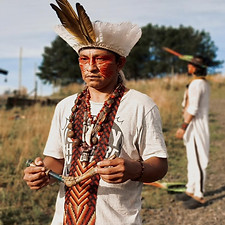
Mene Noke Koî
Shaman | Teacher

Ne'a Noke Koî
Teacher
These figures play an extremely important role in the community; they contribute to its functioning by caring for, teaching, and encouraging the youth. In particular, the leaders are representatives of the community as a whole, at the forefront of discussions, organizations, community work projects, and cultural activities, aiming to encourage other young people to strengthen their people's culture and foster an interest in traditional culture.

More than just a trip, the proposal invites us to a deep immersion in the spirituality and culture of Noke Koî, true guardians of ancestral knowledge.
We will be in contact with the Amazon Rainforest, preserved by these guardians who have their roots in a deep connection with nature, having the privilege of enjoying the presence of the elders of this village - Toniya Village.
It requires advance organization and logistics to reach Toniya Village.
For a rewarding trip to the indigenous community, please contact them through the Shaorewe website, where all the necessary information will be presented and discussed.
Within Brazilian territory, you must fly to the municipality of Cruzeiro do Sul or Rio Branco, in the state of Acre | Brazil.
From these cities, the journey continues by land to Vila São Vicente, at the port, where one boards a motorboat to the community, a trip that generally takes 5 to 6 hours up the Gregório River.
THE JOURNEY, A CALLING...

ACTIVITIES INCLUDED IN THE EXPERIENCE
Noke Koî body painting
- Rome Poto Wheel (Snuff)
- Circle of traditional Txirîti songs
Storytelling with the elders
Forest walk
Traditional games
- Celebration with Matxo (Caiçuma)
- Ceremony with the traditional medicines Oni (Ayahuasca), Rome Poto (Rapé), Vero Txesheti (Sananga) and fumigation with Sepa (Amazonian resin)
Two applications of Kambo medicine
- Herbal bath from the Amazon rainforest
- Walk at the Samauma (sacred tree of the spirits)
- Handicrafts exhibition
Feeding three times a day
- Accommodation
(The schedule may be subject to change if necessary)
- Hammock | Mosquito net or Tent | Sleeping mat
Blanket | Sleeping bag
- Flashlight
Rain boots (Galoshes)
Raincoat
- Sunscreen
Bath towel
Personal hygiene
- Insect repellent
First aid kit (emergency medication for fever and infection)
- Water bottle
- Hat or Cap
- Jacket
Extra food
- Slipper
Comfortable clothing
For a safe and enjoyable trip, it is recommended to get the YELLOW FEVER vaccine at least 15 days before arriving in the forest.
SUGGESTIONS OF WHAT TO BRING
TONIYA VILLAGE | ACRE
NOKE KOÎ PEOPLE | AMAZON RAINFOREST
It requires advance organization and logistics to reach Toniya Village.
For a fruitful trip to the indigenous community, contact the village's staff and leaders, where all necessary information will be presented and discussed.
Within Brazilian territory, you must fly to the municipality of Cruzeiro do Sul or Rio Branco, in the state of Acre | Brazil.
From these cities, the journey continues by land to Vila São Vicente, where the river embarkation takes place. From there, the journey continues with an average duration of 5 hours by motorboat along the Gregório River to the indigenous community.

CONTRIBUTION
Brazilians
FOREIGNERS
(to be defined by experience)
INCLUDED:
- All the scheduled activities in the village;
- Round-trip river transport;
- Eating 3 times a day (breakfast, lunch and dinner):
- Accommodation.
AIRFARE TO ACRE IS NOT INCLUDED.
WARNING: Do not purchase any flights until the trip is confirmed (minimum number of participants required).
REGISTRATION
Send a message via Instagram @shaorewe, WhatsApp +55 (41) 997523234 or email - shaorewe@gmail.com